
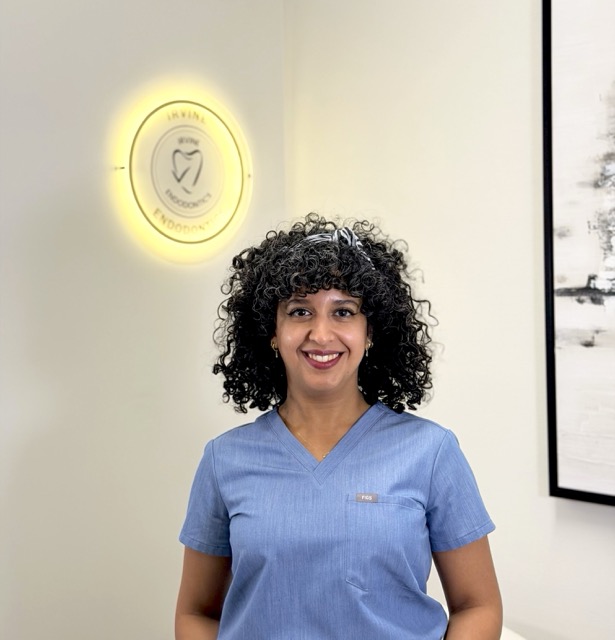
Getting handed a referral slip mid-appointment doesn’t mean your dentist gave up on your tooth. A lot of patients feel a flash of panic the moment their dentist mentions sending them somewhere else for treatment. That reaction usually fades once they understand why referrals happen and what it actually means for a root canal specialist in Orange County to take over their case.
Some Teeth Need More Than Routine Root Canal Care
Not every root canal follows the same script. Some are quick, predictable, and handled start to finish in a single dental office visit. Others involve anatomy or complications that call for a different level of training entirely, and that’s exactly where a referral comes into play.
This isn’t about one dentist being better than another. It’s about matching the right tooth to the right level of expertise, the same way a family doctor sends a complicated case to a specialist instead of guessing.
Complex Canal Anatomy Changes the Whole Plan
Teeth don’t all build their internal anatomy the same way, and some canals twist, branch, or narrow in ways that are genuinely difficult to navigate. Molars are especially notorious for this, often containing multiple canals that curve sharply or hide extra branches an X-ray barely hints at. Treating anatomy like this requires tools and experience that go beyond what a general practice typically keeps on hand.
Calcified canals present a similar challenge. These canals can require specialized instruments and techniques to locate and clean properly, since aging or prior trauma can cause them to narrow significantly over time. A general dentist encountering this mid-procedure often makes the safer call to bring in a specialist rather than push forward.
Persistent or Spreading Infection Raises the Stakes
Some infections respond exactly as expected to standard treatment. Others don’t, and that’s a clear signal something more complicated is happening beneath the surface. When infection has spread into surrounding bone, or a previous root canal failed to fully resolve the problem, the situation calls for a more advanced diagnostic and treatment approach.
This is often where a root canal cost in Orange County starts becoming a bigger question for patients, since retreatment or surgical intervention typically involves more time and expertise than a first-time procedure. Understanding this upfront helps patients avoid feeling blindsided by a referral partway through treatment.
Specialized Equipment Isn’t Just a Bonus, It’s a Necessity
Certain tools simply aren’t standard equipment in a general dental office, and that gap matters more than people realize. Endodontists routinely work with surgical microscopes, advanced imaging, and ultrasonic instruments designed specifically for navigating the tiniest spaces inside a tooth. Without this equipment, finding a hidden canal or confirming complete infection removal becomes far harder to guarantee.
A few situations where this equipment consistently makes the difference include:
- Locating extra canals that don’t show clearly on a standard X-ray
- Treating teeth with severely curved or obstructed canal pathways
- Managing cases where prior treatment left infected tissue behind
- Performing surgical procedures when nonsurgical retreatment isn’t enough
None of these scenarios are rare edge cases either. They show up often enough that referrals have become a completely normal part of everyday dental practice.
How Common Are These Referrals, Really?
Referrals happen more often than most patients assume. In fact, roughly forty-five percent of root canal patients were treated by an endodontist rather than a general dentist in a recent year, which shows just how routine this pathway has become. That statistic alone should ease some of the worry patients feel when handed a referral unexpectedly.
Part of the reason comes down to training itself. Only around three percent of dentists go on to complete the additional two to three years of specialized training required to become an endodontist, meaning most general dentists simply haven’t built the same depth of experience in this narrow area. That’s not a criticism; it’s just a natural result of how dental training branches off into specialties.
What This Actually Means for Your Treatment Outcome
A referral generally works in the patient’s favor, even when it doesn’t feel that way in the moment. Specialists handle complicated anatomy and infections daily, which means they’ve developed instincts general practices simply don’t encounter as often. That experience translates directly into a stronger chance of saving the tooth long-term instead of facing repeat treatment down the road.
Patients sometimes worry a referral signals a worse diagnosis than they originally thought. In most cases, that’s not accurate at all. It usually just means the tooth’s specific anatomy or history calls for tools and training a general practice doesn’t keep on hand.
What to Expect During Your First Specialist Visit
Walking into an unfamiliar office can feel a little intimidating after building trust with your regular dentist. A good specialist typically starts by reviewing your existing imaging and history before running any new tests. From there, expect a clear conversation about what your specific tooth needs and why the referral made sense in the first place.
Most patients leave that first visit with a much clearer understanding of their situation than they had walking in. That clarity alone tends to replace a lot of the initial anxiety with genuine reassurance.
Clear Answers to What Patients Wonder Most
Q1. Does a referral mean my tooth is in worse shape than I thought?
A1. Not necessarily, it usually just means the tooth’s anatomy or history calls for specialized tools and training a general practice doesn’t typically have.
Q2. Why can’t my regular dentist just handle the complicated cases too?
A2. Complex anatomy and calcified canals require specific equipment and years of focused training that most general dental practices simply don’t maintain.
Q3. Is a referred root canal more expensive than one done in-office?
A3. Often, yes, since specialist care and additional equipment typically add cost, though this reflects the added complexity rather than unnecessary upcharging.
Q4. How common is it to get referred for a root canal?
A4. Very common, with a significant share of root canal patients nationally being treated by a specialist rather than a general dentist each year.
Q5. What happens if I skip the referral and wait?
A5. Waiting on a complex or infected tooth generally increases the risk of the infection spreading further, which can make treatment more difficult later.
Q6. Will I need new X-rays at the specialist’s office?
A6. Sometimes, particularly if additional imaging is needed to fully map out canal anatomy or confirm the extent of infection.
Q7. Does a referral mean my general dentist made a mistake?
A7. No, referrals reflect a proactive decision to match your tooth’s complexity with the right level of expertise, not any failure on their part.
Q8. Can a referred tooth still be saved instead of extracted?
A8. In most cases, yes, since specialists are specifically trained to handle exactly this kind of complex, high-risk situation.
Complex Teeth Deserve Specialist-Level Care
A referral isn’t a step backward; it’s a decision that puts your tooth in more capable hands. Every twisting canal or stubborn infection has a better shot at healing when the right training and tools are behind the treatment.
Cases like these land on our team’s schedule every day at Irvine Endodontics, and we treat each referral as exactly what it is: a chance to save a tooth that needs more specialized attention. As a well-known root canal specialist in Orange County, we break down your specific anatomy in plain terms and explain the thinking behind every recommendation before any treatment begins, since saving your natural tooth stays our focus throughout.
A referral just brought you our way, or maybe you’re searching on your own for someone experienced with complicated cases. Either way, our doors are open to walk you through exactly what your tooth needs next.