A toothache does not automatically mean you need a root canal. Before any treatment begins, specialists run a series of tests to confirm what is really happening inside your tooth. Understanding this process helps you make informed decisions about your dental health. If you are exploring options for a root canal in Orange County, knowing what specialists check first puts you in a better position when you walk into the office.
The Diagnosis Comes Before the Drill
A tooth can hurt for many different reasons, and most of them do not require a root canal in Orange County. People often assume the worst the moment they feel a sharp sting or a dull, persistent throb. The truth is, endodontists spend a good portion of their time figuring out what a tooth does NOT need, just as much as what it does. The diagnostic process is careful, layered, and built around saving your natural tooth whenever possible.
Your Symptoms Tell a Story First
Before any tool touches your mouth, the specialist listens. They ask you detailed questions about your pain. Is it constant or does it come and go? Does it spike when you bite down, or does it linger long after a hot or cold drink? These answers are not small talk. They are clinical clues.
A sharp pain that disappears quickly after a cold stimulus often points to a tooth with reversible pulpitis, which means the nerve is irritated but not yet dying. On the other hand, pain that lingers for 30 seconds or more after temperature contact suggests the pulp tissue may be inflamed beyond recovery. These two situations lead to very different treatment plans.
The Cold Test: Small Tool, Big Information
One of the first hands-on tests an endodontist performs is the cold test, also called thermal testing. A cold spray, often ethyl chloride or a product like Endo Ice, is applied to the tooth surface for a few seconds. The way your tooth responds gives the specialist a clear window into the health of your pulp.
A quick, sharp sensation that fades within seconds means the pulp is alive and responding normally. A prolonged, intense response that does not let up is a strong sign of irreversible pulp inflammation.
No response at all can mean the pulp tissue has already died, which is a separate condition that also often requires intervention. Each response points the specialist in a different direction before any drilling even enters the conversation.
Tapping the Tooth: The Percussion Test
After checking the inside of the tooth, the specialist turns attention to the outside. Percussion testing involves gently tapping on the tooth with a dental instrument. It sounds simple, but it reveals something important: the health of the tissues surrounding the root tip.
Pain when tapping suggests the infection or inflammation may have spread beyond the pulp and into the supporting bone and ligaments. This finding shifts the diagnosis significantly. A tooth that is sensitive to touch on top but feels normal otherwise tells a very different story than one that aches just from biting.
Electric Pulp Testing and Selective Anesthesia
Some specialists add electric pulp testing to their evaluation. A low, safe electrical current is passed through the tooth to test how the nerve responds. If the nerve is healthy, you will feel a slight tingling. If there is no response, the nerve may already be non-vital. This test is especially useful when cold testing gives an unclear result.
There is also a technique called selective anesthesia. When pain is hard to localize, and a patient cannot point to which tooth is causing the problem, the specialist numbs one tooth at a time to track down the source. Referred dental pain is surprisingly common. A molar can make a patient feel like an upper front tooth is the culprit. Selective anesthesia cuts through that confusion quickly and reliably.
What the X-Ray Actually Shows (and What It Misses)
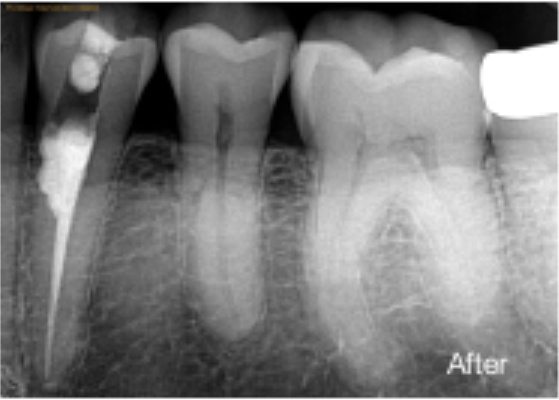
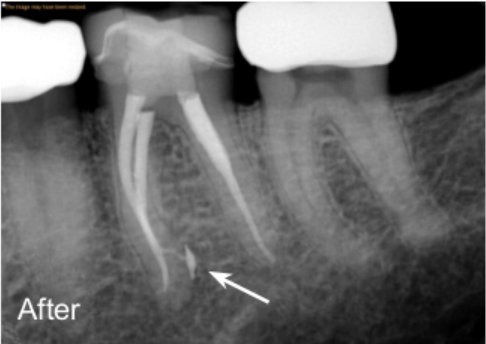
Digital X-rays are a standard part of every endodontic evaluation. The specialist looks for bone loss around the root tip, which shows up as a dark shadow called a periapical lesion. They also check for deep decay that may have reached the pulp chamber, cracks in the root, and the shape and number of canals inside the tooth.
However, X-rays do not catch everything. Early-stage inflammation inside a tooth will not always appear on a flat two-dimensional image. This is one reason why specialists do not rely on imaging alone. The combination of symptoms, thermal testing, percussion testing, and radiographs together builds the full picture.
For more complex cases, a CBCT scan, which produces a three-dimensional view of the tooth and surrounding bone, can reveal things a standard X-ray simply cannot. This is especially helpful for detecting hidden fractures or extra canals that are easy to miss.
Cracked Teeth: The Diagnosis That Requires Extra Care
Tooth cracks are one of the trickier things to diagnose. A crack can run vertically down the root, sometimes completely invisible on an X-ray. Bite testing helps here. The specialist has you bite down on a small stick or bite pad one cusp at a time. Pain on release of biting pressure is a classic sign of a cracked tooth syndrome.
Not every cracked tooth needs a root canal. A crack confined to the crown of the tooth may only need a crown to hold it together and stop the pain. A crack that has reached the pulp or extends down the root is a different matter entirely. The location and depth of the crack decide the outcome, and a thorough clinical exam is the only way to know for sure.
When the Diagnosis Says It Is Not a Root Canal Issue
Here is something many patients do not know: endodontists regularly diagnose toothaches that turn out to have nothing to do with the pulp. Gum disease, causing bone loss around a root, can mimic root canal symptoms almost perfectly. Sinus pressure can make upper back teeth feel intensely painful. A cracked filling, a shifting crown, or even grinding can all create pain that feels like it goes deep into the nerve.
A good specialist checks all of these possibilities before landing on a treatment recommendation. The goal is always to find the real source of the problem, not to just run through a checklist and arrive at a procedure.
Understanding the Cost Side of the Equation
Once a diagnosis is confirmed, understanding what comes next financially is a reasonable concern. The root canal cost in Orange County depends on several factors, including which tooth is being treated, how many canals it has, and the complexity of the case.
Front teeth typically have one canal and are less expensive to treat. Back molars can have three or more canals and require more time and skill, which affects pricing. Endodontists generally charge more than general dentists, and that difference reflects advanced training, specialized equipment, and a higher success rate on difficult cases.
Most dental insurance plans cover a portion of the procedure, but it is worth confirming your plan’s annual maximum before treatment begins, since a crown is almost always needed after a root canal and adds to the total cost.
Your Questions, Answered: The Truth About Toothaches and Root Canals
Q1: Does every toothache mean I need a root canal?
A1: No. Most toothaches stem from cavities, cracked fillings, or gum issues. A root canal is only needed when the pulp is irreversibly damaged or infected.
Q2: What is the pulp, and why does it matter?
A2: The pulp holds the tooth’s nerves and blood vessels. When it gets infected, removing it through a root canal stops the infection from spreading to the bone.
Q3: How long does a root canal diagnosis appointment take?
A3: Most diagnostic visits take 30 to 60 minutes, covering symptom review, clinical tests, and X-rays. Complex cases needing CBCT imaging may run a bit longer.
Q4: Can a tooth need a root canal with no pain?
A4: Yes. Dead nerves or slow infections often cause no pain. The infection only shows up as a shadow on an X-ray, which is why routine imaging matters.
Q5: Is the cold test painful?
A5: It causes a brief sting, similar to a cold drink. Most people feel mild discomfort for a few seconds. A lingering response is itself a key diagnostic sign.
Q6: What happens if I delay treatment after a confirmed diagnosis?
A6: The infection spreads deeper, risking abscess, bone loss, or tooth loss. A simple procedure can turn significantly more complex and costly the longer it waits.
Q7: Can a tooth be saved if the infection has spread to the bone?
A7: Often, yes. Once the infected pulp is removed and the canal sealed, the surrounding bone typically heals on its own over time.
Q8: What is the difference between a general dentist and an endodontist for root canals?
A8: Endodontists complete two to three extra years of specialized training and use advanced tools like microscopes and CBCT imaging, making them better suited for complex cases.
Your Tooth Deserves a Second Look Before Any Decision Is Made
A toothache is worth taking seriously, but it is not a reason to panic. Irvine Endodontics walks every patient through a thorough evaluation before anything is recommended. We use thermal testing, digital imaging, percussion testing, and CBCT scans when needed to confirm exactly what is happening.
If a root canal is what your tooth needs, we will explain why clearly. If it is not, we will tell you that as well.