
A tooth abscess is a bacterial infection that does not resolve on its own. Left alone, it spreads, damages the surrounding bone, and puts your overall health at risk. Knowing how tooth abscess treatment in Irvine works, step by step, helps you act fast and make confident decisions about your care before the situation gets worse.
An Abscess Is Not Just a Bad Toothache
A tooth abscess is a pocket of pus caused by a bacterial infection inside or around the tooth. It is not a cavity you can wait out or a sensitivity that fades on its own. The infection builds pressure against surrounding tissue, nerve endings, and bone, which is what creates that deep, throbbing pain that feels impossible to ignore.
The real danger is what happens when treatment is delayed. The bacteria do not stay put. They move into the jawbone, travel along tissue planes, and in serious cases, reach the neck or even the bloodstream.
Dental infections have sent people to emergency rooms and, in rare but documented cases, have been life-threatening. That is not meant to cause panic. It is meant to explain why acting quickly matters.
Not All Abscesses Start the Same Way
Understanding the type of abscess you have guides the entire treatment plan. There are two main types that endodontists deal with regularly.
A periapical abscess forms at the tip of the tooth root. It usually starts when bacteria from deep decay, a crack, or a failed old filling invade the pulp, the soft tissue inside the tooth that holds nerves and blood vessels. Once the pulp becomes infected, bacteria travel down to the root tip and start destroying the surrounding bone. This type responds well to root canal therapy when caught in time.
A periodontal abscess forms in the gum tissue beside the root, usually as a result of advanced gum disease, creating deep pockets where bacteria accumulate. This type requires a different treatment approach and is generally handled alongside a periodontist.
Knowing the difference matters because each type has a specific treatment path, and mixing them up leads to incomplete care.
Step One: Diagnosis and Imaging
The first step in treating any abscess is figuring out exactly what is happening inside the tooth and the surrounding bone. A tooth pain specialist will not guess based on symptoms alone. They take a periapical X-ray to look for a dark shadow at the root tip, which indicates bone loss caused by infection. They also tap on the tooth, test temperature sensitivity, and probe the surrounding gum tissue.
In more complex cases or when the infection’s extent is unclear, a CBCT scan gives a three-dimensional view of the root, bone, and infection. This level of detail helps the specialist plan treatment accurately instead of discovering complications mid-procedure. The diagnosis visit is not a formality. It is where the correct treatment path gets established.
Step Two: Draining the Infection
Before any definitive treatment begins, the pressure from the abscess often needs to be relieved. This step brings the most immediate pain relief of the entire process.
If swelling is present in the gum tissue, the specialist makes a small incision to allow the pus to drain out. The area is then flushed with a sterile saline solution to clear out bacteria. In some cases, a tiny rubber drain is placed in the incision for a day or two to keep the site open and allow any remaining infection to escape. The drop in pressure after drainage is significant, and most patients notice substantial pain relief within hours.
Step Three: Addressing the Source of Infection
Draining the abscess relieves symptoms, but it does not fix the underlying problem. The source of the infection still needs to be treated, and this is where the decision between saving the tooth and removing it gets made.
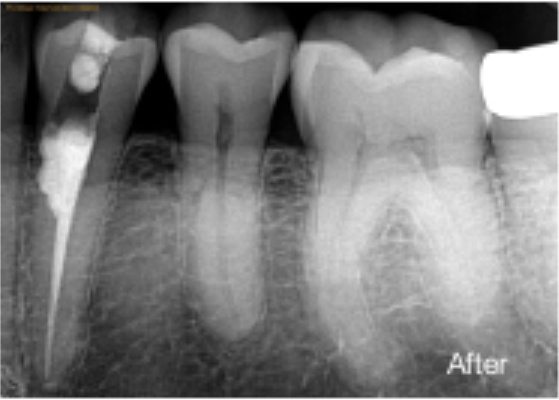
For a periapical abscess where the tooth structure is still intact and restorable, root canal therapy is the standard course of treatment. The specialist numbs the area completely, makes an access opening in the crown of the tooth, and removes all infected pulp tissue from inside. The canals are then cleaned, shaped, and disinfected thoroughly.
Sodium hypochlorite irrigation reaches areas that instruments cannot, including lateral branches and isthmus connections inside the root. Once the infection is fully cleared, the canals are sealed with gutta-percha to prevent bacteria from re-entering.
This is the step where patients looking to save their tooth instead of extraction get the outcome they are hoping for. A well-executed root canal on a tooth with a healthy root structure almost always preserves the tooth successfully.
Step Four: The Role of Antibiotics
Antibiotics are commonly prescribed alongside abscess treatment, but they serve a supporting role, not a primary one. They cannot penetrate an abscess cavity effectively because the infection is enclosed and lacks a blood supply. What antibiotics do well is control bacterial spread into surrounding tissue and reduce systemic symptoms like fever or swelling that has moved beyond the local area.
Amoxicillin is the most commonly prescribed antibiotic for dental infections, with alternatives for patients who have penicillin sensitivities.
The standard course runs five to seven days. Completing the full course matters even after symptoms improve, because stopping early can leave resistant bacteria behind. Antibiotics alone, without draining the abscess and treating its source, will not resolve the infection permanently.
Step Five: Restoring the Tooth After Treatment
Once the root canal is complete and the infection has resolved, the tooth needs to be restored to full function. A root canal removes the pulp, which means the tooth no longer receives moisture and nutrients from inside. Over time, this makes it more brittle. A dental crown placed over the treated tooth protects it from cracking under daily biting force.
For back teeth, a crown is almost always necessary. Front teeth may only need a filling in some cases, but the structural support a crown provides is hard to replicate with a filling alone. Skipping the crown after a root canal is one of the most common reasons treated teeth eventually fracture and are lost.
When the Tooth Cannot Be Saved
Not every abscessed tooth is a candidate for root canal therapy. A tooth with a vertical root fracture, severe bone loss around all roots, or decay that has destroyed too much structure may need to be extracted. Extraction eliminates the infection source completely and prevents further damage to surrounding teeth and bone.
The gap left by an extracted tooth needs to be addressed. Neighboring teeth shift toward open spaces over time, which disrupts bite alignment and can cause jaw joint problems. Implants, bridges, and partial dentures are all options worth discussing after the infection has fully resolved.
What Happens If You Wait
A dental abscess does not plateau. It either gets treated or it gets worse. Bone destruction around the root continues silently. The infection can spread into the jaw, track into the neck, or, in the most severe cases, compromise the airway. Facial swelling that moves toward the eye or the neck, fever, and difficulty swallowing are signs that the infection has moved beyond the tooth and requires emergency care.
Seeing a tooth pain specialist near you early gives the tooth its best chance and keeps the treatment straightforward. Waiting turns a manageable problem into a complicated one.
What Patients Ask Most Before Treatment
Q1: Can a tooth abscess go away on its own?
A1: No. A tooth abscess needs professional treatment. The infection will not clear without draining the pus and removing the bacterial source inside or around the tooth.
Q2: How do I know if my tooth is abscessed or just sensitive?
A2: Abscess pain is typically constant, throbbing, and severe. Sensitivity reacts to a trigger and fades. Swelling near the tooth, a pimple-like bump on the gum, fever, or a foul taste are strong signs of an abscess.
Q3: Is a root canal painful when treating an abscess?
A3: Modern local anesthesia makes the procedure comfortable for most patients. A very active infection can make numbing slightly harder, which is why antibiotics or drainage may be done first to calm the area before the root canal begins.
Q4: How long does tooth abscess treatment take from start to finish?
A4: Drainage and initial relief can happen in one visit. The full treatment, including root canal and crown, typically spans two to three appointments over a few weeks, depending on how quickly the infection resolves.
Q5: Can antibiotics alone cure a tooth abscess?
A5: No. Antibiotics manage bacterial spread but cannot eliminate the enclosed pocket of infection. The abscess must be drained and the source treated through a root canal or extraction for the infection to fully resolve.
Q6: What is the difference between a dentist and an endodontist for abscess treatment?
A6: General dentists handle many abscess cases well. Endodontists specialize specifically in infections inside and around the tooth root, use advanced imaging, and are the preferred choice for complex, severe, or recurring infections.
Q7: Will the bone lost from an abscess grow back?
A7: In many cases, yes. Once the infection source is removed, the body begins rebuilding bone around the root tip over several months. Follow-up X-rays at six and twelve months confirm that healing is progressing.
Q8: Is tooth extraction ever the better choice over a root canal for an abscess?
A8: Extraction makes sense when the tooth cannot be restored structurally, has a vertical fracture, or has severe bone loss with no viable root remaining. For most abscessed teeth with intact roots, saving the natural tooth is the better long-term outcome.
Your Tooth Still Has a Fighting Chance
Treating an abscess promptly almost always leads to a better outcome, less bone loss, less complexity, and a higher chance of keeping the tooth. Irvine Endodontics has handled abscessed teeth at every stage, from early infections caught quickly to advanced cases other providers deemed untreatable.
Also, we approach each case with the goal of saving your tooth instead of extraction, wherever the clinical situation allows. The sooner an abscessed tooth gets proper attention, the more options remain on the table.